

The 35 Easiest Ways to Reduce Your Carbon Footprint
https://news.climate.columbia.edu/2018/12/27/35-ways-reduce-carbon-footprint/
How to keep track of the ever-rising levels of CO2 in our atmosphere
https://www.co2.earth/daily-co2
As of February 2025, the level of carbon in our atmosphere is 427 parts per million (ppm). We need to work together to bring this down to 350 ppm or lower to prevent runaway global warming and
catastrophic changes to our climate and ecosystems.
Live carbon neutral
https://ostromclimate.com/purchase-offsets/ (See more info and options below)
Important Information About Our Shared Global Climate

Climate Emergency - PeoplesClimate-Melb-IMG 8280 (15121150847). Photo by Takver from Australia, 2014. Creative Commons Attribution-Share Alike 2.0. **

Global Climate Strike IMG 0237 (40438403493). Photo by Becker1999 from Grove City, OH, 2019. Creative Commons Attribution 2.0. **
_edited.jpg)
Tips for Reducing Your Carbon Footprint. AdobeStock_060501609
Make climate action a high priority when voting
No one likes to spend a lot of money on groceries. But this problem is minor compared with the catastrophic long-term damage that will occur if our planet continues to heat up - and we are still in the early stages. There is no limit to how terrible the consequences could become, if allowed to run unchecked. We have to stop polluting our atmosphere at some point, and if we do it now, we can ensure a livable future for our descendants.
Divest from fossil fuels and invest in the renewable sector instead
Many people have invested money in oil, gas, and coal. They can simply begin to invest and
make money in the renewable sector instead. When humanity discovered that asbestos and
DDT were dangerous, we adjusted and stopped using those toxic substances. We can do the
same with planet-destroying fossil fuels.
Rising sea levels will inundate every coastal city
The melting of the massive Greenland and East Antarctic ice sheets will raise sea levels by
as much as sixty feet by the beginning of the next century, permanently submerging every
coastal city on the planet.
Refugees
People whose ecosystems are destroyed by drought, superstorms, flooding, and wildfires will seek to move to more stable areas. If we do not stop climate change now, there could eventually be hundreds of millions of refugees around the world trying desperately to migrate to better places - a process which has already begun. This will lead to terrible conflicts over dwindling arable land and resources. We must stop global warming before we reach that point.

Drought-severity. Map by Sampa, 2017. Creative Commons Attribution-Share Alike 4.0 International license. ****
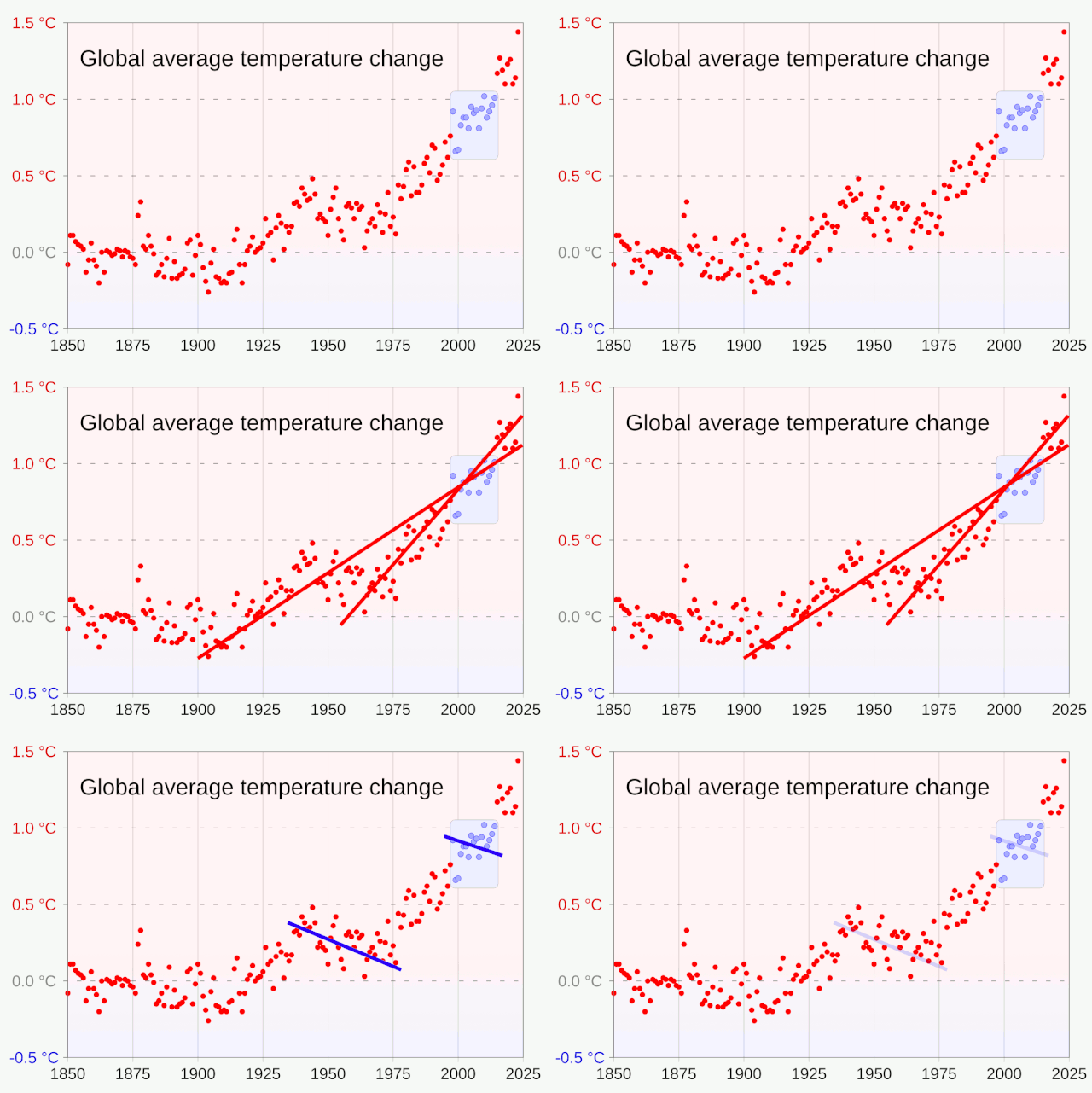
20200327 Climate change deniers cherry picking time periods. Graph by RCraig09, 2020. Creative Commons Attribution-Share Alike 4.0. ****
ddd
"In some places it is actually sometimes cooler."
As rising temperatures around the world disrupt the normal climate patterns, we will see
more and more extremes and anomalies of all kinds. The important measurement is the
combined total of temperatures from across the planet. This combined sum is what heats
the oceans.
"What we do will not make a difference because China is the biggest polluter."
For all of its problems, China is currently the world leader in renewable energy, which accounts for over 70% of its total energy production. The United States and Canada are falling behind in investing in these new technologies, which will inevitably spread around the world.
"We are an oil-based economy and cannot change."
We can change. Renewable energy is already cheaper to generate than fossil fuel energy. If governments stopped subsidizing the oil and gas sector and supported renewable energy instead, the cheaper and cleaner advanced technologies of solar, wind, and geothermal would even-more quickly replace fossil fuel generation.
"I hear many things online that contradict the idea of human-caused climate change."
Oil companies spend hundreds of millions of dollars to lobby and persuade politicians to spread misinformation about the dangers of climate change, and even to deny its existence. These lobbies also fund a small handful of quack "scientists" to spread misinformation - who are actually lobbyists rather than scientists and never publish in scientific journals - which is then amplified online by uneducated readers. The scientific debate ended forty years ago.
ddd
ddd
ddd
ddd
Common Misconceptions


Six Degrees Could Change the World - National Geographic Society
An Inconvenient Truth - Al Gore
https://tv.apple.com/us/movie/an-inconvenient-truth/umc.cmc.1ilv7n3r1plk243zvphp2wkm0
Before the Flood - Leonardo diCaprio
https://watchdocumentaries.com/before-the-flood/
Other Resources
Creatively United
The Creatively United website offers a wide variety of options and resources, from a free webinar series to posts and resources, that explore solutions to restore and regenerate the planet.
Voluntary Simplicity or "Maximum satisfaction, minimum consumption"
What is voluntary simplicity? Voluntary simplicity is a way of life that rejects the high-consumption, materialistic lifestyles of consumer cultures. The rejection of consumerism arises from the recognition that ordinary Western-style consumption habits are degrading the planet; that lives of high consumption are unethical in a world of great human need; and that the meaning of life does not and cannot consist in the consumption or accumulation of material things.
https://simplicitycollective.com/start-here/what-is-voluntary-simplicity-2
Sabin Center for Climate Change Law
Highly Recommended Documentaries

Leave Fossil Fuels in the ground - Melbourne climate march for our future - -stopAdani - IMG 3900 (32357221178). Photo by John Englart from Fawkner, Australia, 2018. Creative Commons Attribution-Share Alike 2.0 Generic license. **

People’s Climate March 2017 in Washington DC 39. Photo by Dcpeopleandeventsof2017, 2017. Creative Commons Attribution-Share Alike 4.0. ****

Global Renewable Energy Production by Countries and Sources in 2023. Eleonora Galliani, 2024. Creative Commons CC0 1.0 Universal Public Domain Dedication.
What Are Carbon Offsets?
As the global focus on sustainability intensifies, various industries are grappling with the challenge of reducing their environmental impact. One significant concern is the greenhouse gas (GHG) emissions produced by travel. To address these emissions, many organizations have turned to carbon offsets as a partial solution.
Carbon offsets involve supporting projects that reduce or remove carbon emissions elsewhere to compensate for the emissions produced during travel activities. While offsets offer potential benefits, they also come with their own set of advantages and disadvantages.
Pros of Offsetting GHG Emissions:
-
Carbon Neutrality: Offsets allow organizations to achieve carbon neutrality by balancing out emissions from travel with carbon reduction projects. This demonstrates a commitment to environmental stewardship and sustainability.
-
Scalability and Flexibility: Offsets offer flexibility in addressing GHG emissions associated with travel, as they can be applied to various modes of transportation. This scalability allows organizations to tailor their offsetting efforts to specific travel needs.
-
Support for Renewable Energy and Conservation Projects: Offsets often support projects related to renewable energy, reforestation, or conservation. By investing in such projects, organizations can contribute to the development of clean energy sources and the preservation of natural habitats.
-
Education and Awareness: Offsetting initiatives provide an opportunity to educate customers, participants and clients about climate change, carbon footprints, and the importance of sustainable practices. This awareness can inspire behavioral changes beyond offsetting, promoting a broader culture of sustainability in all sectors.
Cons of Offsetting GHG Emissions:
-
Limited Efficacy in Reducing Emissions: While offsets can compensate for emissions generated during travel, they do not directly reduce emissions from transportation.
-
Perceived Greenwashing: Offsets need to be part of a comprehensive sustainability strategy rather than a standalone solution; otherwise, they can be seen as a form of greenwashing—allowing organizations to appear environmentally responsible without committing to reducing emissions at the source.
-
Social and Environmental Considerations: Some offset projects have faced criticism for displacing local communities or negatively impacting biodiversity. Ensuring the selection of high-quality offsets that adhere to recognized standards is crucial to mitigate these concerns.
-
Additionality and Integrity: Ensuring that projects funded through offsets genuinely reduce emissions that would not have occurred otherwise is critical. Verifying the additionality of projects and maintaining integrity in the offset market can be challenging and requires robust monitoring and verification systems.
In addition to these high level points, I've included the following key principles to consider when sourcing reputable sources for carbon offsetting:
Key Principles of Purchasing Carbon Offsets
Before purchasing carbon offsets, it is essential to consider the following key principles to ensure their credibility and effectiveness:
-
Additionality: Ensure that the offset project leads to emissions reductions that would not have occurred in the absence of the project. This principle ensures that the offsets are genuinely contributing to reducing greenhouse gas emissions.
-
Permanence: Assess the long-term permanence of the offset project. It is crucial to ensure that the emissions reductions achieved through the project will be sustained over time and not reversed in the future.
-
Verifiability: Verify that the emissions reductions claimed by the offset project are accurately measured, independently verified, and transparently reported. Robust verification processes provide confidence in the credibility of the offsets.
-
Credible Standards and Certification: Look for offsets that are certified by recognized standards and programs such as the Verified Carbon Standard (VCS), Gold Standard, or Climate Action Reserve. These standards ensure that the offsets meet rigorous criteria and adhere to best practices.
-
Additionality Integrity: Assess the integrity of the additionality claim of the offset project. This includes evaluating whether the project's emissions reductions are genuinely additional to the baseline scenario and whether they are accurately quantified and verified.
-
Co-benefits: Consider the broader environmental and social co-benefits of the offset project. For example, projects that contribute to biodiversity conservation, support local communities, or promote sustainable development are preferable as they deliver additional positive impacts beyond emissions reductions.
-
Transparency and Traceability: Look for offsets that provide clear and transparent information about the project location, type, and methodology used. Transparency enables stakeholders to assess the integrity and impact of the offset project.
-
Avoidance of Double Counting: Ensure that the offsets are not double-counted or claimed by multiple entities. The offsets should be retired or canceled to prevent their re-use or double-counting, thereby maintaining the integrity of emission accounting.
-
Long-term Commitment: Seek offsets from projects that have a long-term commitment and sustainable financing to ensure their ongoing operation and maintenance. Long-term commitment demonstrates the project's ability to deliver consistent emissions reductions over time.
-
Consultation and Engagement: Consider offsets that involve consultation and engagement, particularly projects that have engaged local communities, Indigenous groups, and other affected parties. This ensures that the offset project respects local rights and priorities.
The following organizations are offsetting groups I have worked with in the past and
feel comfortable recommending to help support your efforts:
Ostrom Climate: https://ostromclimate.com/purchase-offsets/
Less: https://www.less.ca/en-ca/lessoffsets.cfm
PlanetAir: https://planetair.ca/en/


Climate Emergency - Families facing Climate Change (3622617318).jpg.
Takver from Australia, 2009. Creative Commons Attribution-Share Alike 2.0. **

Information about Carbon Offsets
(From an article written by my colleague, Gillian Orris)
Peacock on fence beside “Please respect wildlife” sign. Photo by Renn Butler, 2025.
ddd
ddd